Long before restaurants existed, before cookbooks were printed, before food became content — there was fire. A hunk of meat suspended over heat. Fat dripping into flame. The sizzle that signals something good is coming.
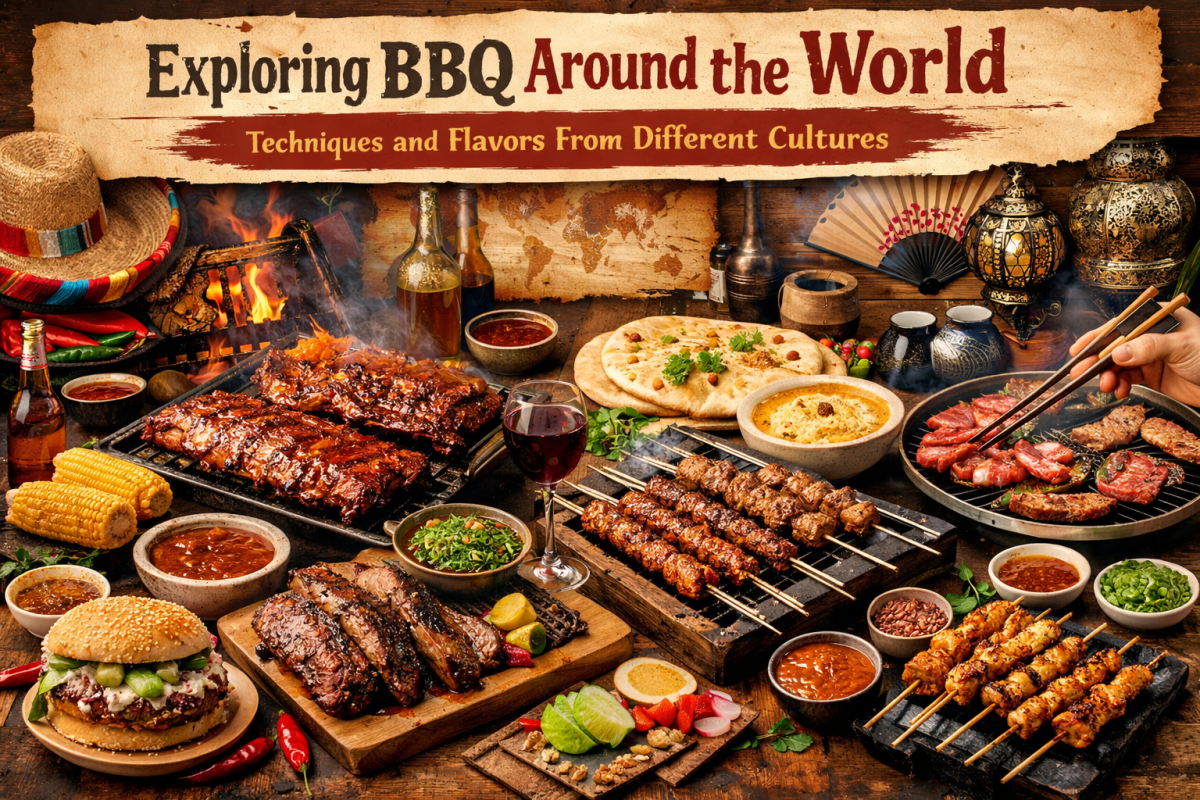
Barbecue, in its broadest definition, is humanity's oldest cooking method. But call it "barbecue" at a backyard cookout in Kansas City, a seaside shack in Seoul, or a hillside asado in Argentina, and you'll quickly discover that the word barely scratches the surface. Each culture that has wrapped its identity around live-fire cooking has produced something entirely its own — a unique convergence of technique, seasoning, wood, time, and philosophy.
This isn't a story about who does it best. It's a story about how fire, and the food cooked over it, says something profound about the people who gathered around it.
The American South: Low, Slow, and Deeply Personal
No conversation about barbecue can skip the American South, where the tradition runs so deep it's practically constitutional. What began as a practical necessity — slow-cooking tough, cheap cuts of meat over hardwood coals — became a regional religion with denominations that would make a theologian dizzy.
The Four Pillars of American BBQ
American barbecue fractures into four main regional styles, and each camp defends its method with the passion of someone whose grandmother taught them personally.
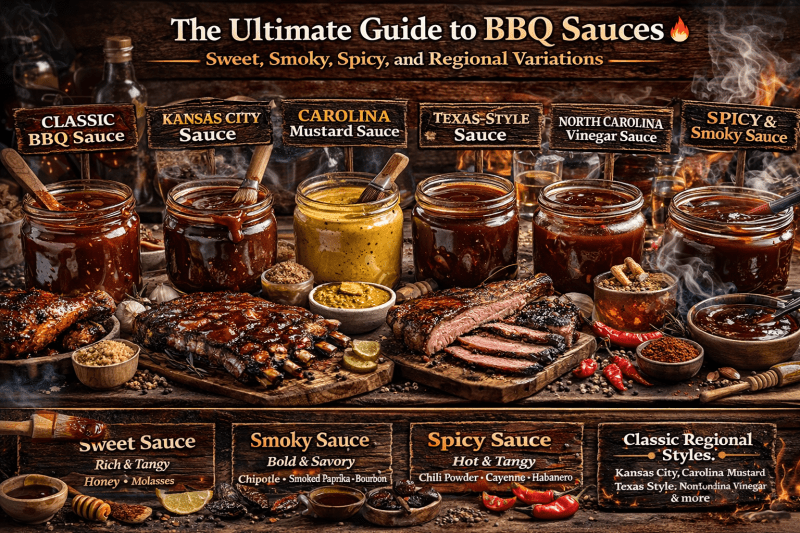
Texas-style is defined by the beef — specifically brisket, which spends up to 18 hours in an offset smoker filled with post oak or pecan wood. The rub is minimal: salt, black pepper, maybe a touch of garlic. The meat speaks for itself. True Texas pit masters will tell you that sauce is a crutch, and they are not wrong.
Memphis-style splits into two factions: wet and dry. Dry-rub ribs are coated with a blend of spices — paprika, cumin, cayenne — and smoked low and slow without any sauce during cooking. Wet ribs get mopped throughout. The city's iconic pulled pork sandwiches have a tangy tomato-based sauce that's aggressive but not overwhelming.
Kansas City pulls from everywhere and apologizes for nothing. A thick, molasses-heavy sauce glazed onto ribs, burnt ends made from point-cut brisket caramelized into sticky cubes of heaven, and a democratizing approach that says any meat can be great if you give it time and smoke.
Carolina splits further still — eastern versus western, vinegar versus ketchup-vinegar. Eastern Carolina purists use only whole hog and a thin vinegar-pepper sauce that cuts through fat with surgical precision. The Lexington (western) style adds a bit of tomato. The debate between these factions has lasted generations and shows no sign of resolution.
What unifies all of them is the smoke. American BBQ is not grilling. It's smoking — indirect heat, low temperature (usually 225–275°F), hours of patience, and hardwood that perfumes the meat with something you cannot replicate in an oven or on a gas grill.
Argentina and Uruguay: The Asado Is a Ceremony
Cross the Atlantic and travel to the Río de la Plata region, and you'll find a culture where the asado isn't just dinner — it's a social contract. In Argentina and Uruguay, the Sunday asado is sacred. It means family is coming, it means the day belongs to no one's schedule, and it means someone is standing beside the fire for four hours doing the quiet, careful work of feeding everyone.
The Parrilla and the Grill Master
The parrilla — a traditional Argentine grill built with adjustable grates over wood coals — is the altar of this tradition. Crucially, Argentines do not use charcoal. They use wood, burned down to embers in a separate fire, which are then shoveled under the grate. This gives the cook control over heat intensity without producing the bitter smoke of burning wood directly under meat.
The asado master (asador) is a position of genuine social status. No one appoints themselves; the role is conferred through years of trusted performance. The asador watches the fire, watches the meat, and says very little. The watching is the work.
Cuts favored in Argentine asado include tira de asado (flanken-cut short ribs), vacío (flank), entraña (skirt steak), offal like mollejas (sweetbreads) and chorizos, and the grandest cut of all — the costillar, a full rack of ribs cooked over several hours, often suspended vertically on a cross-shaped spit called the asador a la cruz.
Seasoning is almost insultingly simple: salt. Sometimes coarse chimichurri — that bright, herby sauce of parsley, garlic, olive oil, and vinegar — served on the side. The philosophy is that quality meat cooked slowly over good wood doesn't need help. A perfectly cooked tira de asado needs nothing but a knife, a fork, and a glass of Malbec.
South Korea: Where Tabletop Cooking Became Theater
Korean barbecue — gogi-gui — is an entirely different animal from anything the West associates with the word. Here, the grill is embedded in the table. You are the cook. And the meal is as much social performance as sustenance.
Samgyeopsal, Galbi, and the Art of the Banchan
Walk into a Korean BBQ restaurant and the table is already set for chaos — small dishes of banchan (fermented vegetables, pickled radish, kimchi, seasoned spinach) surround a central grill, often charcoal-fired or gas-heated through a ventilation hood above the table. The server brings raw meat; the eating doesn't start until the sizzle does.
Samgyeopsal (thick-cut pork belly) is the most popular cut — fatty, uncured, deeply flavorful when given a few minutes per side on the grate. You wrap a piece in a perilla leaf or a lettuce leaf, add a smear of ssamjang (fermented soybean paste with chili), a sliver of raw garlic, a piece of kimchi, and fold it into a parcel. One bite, no exceptions.
Galbi (short ribs) are marinated in a mixture of soy sauce, Asian pear (which tenderizes the meat enzymatically), sesame oil, garlic, and sugar. The result is a lacquered, caramelized rib that balances sweet, savory, and smoke in a way that's become beloved far outside Korea.
Bulgogi — thinly sliced marinated beef — cooks so quickly it barely seems like grilling, but the combination of fat rendering and caramelizing sugar creates a char that's uniquely Korean.
What makes Korean BBQ extraordinary is not a single technique but the totality of the experience. The interplay of fermented, raw, sweet, spicy, and smoky flavors across a table covered in small dishes creates a kind of organized culinary complexity that's deeply communal and endlessly satisfying.
Japan: Yakitori and the Precision of Simplicity
If Korean BBQ is communal theater, Japanese yakitori is meditative craft. A yakitori-ya (yakitori restaurant) often has a counter, a charcoal grill running the length of it, and a tare chef — someone who has possibly spent years perfecting one thing: chicken on skewers over binchotan charcoal.
Binchotan: The White Charcoal Secret
Binchotan is Japanese white charcoal made from oak, burned at extremely high temperatures in a specific process that produces a charcoal that burns hotter, longer, and cleaner than standard charcoal. It produces minimal smoke, almost no flame, and a radiant heat that cooks meat from the inside out. Professional yakitori chefs insist it cannot be replicated.
Every part of the chicken appears on a yakitori menu — breast, thigh, liver, heart, skin, cartilage, gizzard, and the tail (bostail). Each cut is threaded onto bamboo skewers and seasoned with either salt (shio) or a house tare sauce — a reduction of soy, mirin, sake, and sugar that gets more complex every time the skewers are dipped back into it, day after day, as the tare builds layers.
The craft is in the fire management: lifting skewers to cooler zones, rotating them to ensure even contact, timing the glaze precisely so it caramelizes without burning. A yakitori chef who has worked the same grill for a decade has mastered something most people will never fully appreciate.
Beyond yakitori, Japan's broader live-fire tradition includes robata (hearth cooking), yakiniku (Japanese-style Korean BBQ), and regional kushikatsu (battered and skewered meats and vegetables, fried but sharing the same skewered DNA).
South Africa: Braai Is Identity
To understand the South African braai, you need to understand that it is not a cooking method. It is a cultural identifier. South Africans across all racial and ethnic backgrounds — Zulu, Afrikaans, Xhosa, English-speaking — claim the braai as their own. It is, remarkably, one of the few things that unites the country.
The Braai as Social Glue
The braai centers around direct-heat cooking over wood coals, often with boerewors (farmer's sausage) — a coiled beef and pork sausage seasoned with coriander, clove, nutmeg, and vinegar that has a flavor unlike any sausage anywhere else in the world. Cooked whole, in one continuous spiral that must never, under any circumstances, be cut before it's fully cooked. Boerewors cut during cooking is a social offense.
Sosaties — lamb skewers marinated in curry-apricot sauce and threaded with onion and dried fruit — reflect Cape Malay culinary heritage and bring a sweet, aromatic complexity to the coals. Pap (a stiff cornmeal porridge) serves as the essential accompaniment, often topped with a tomato-onion relish called chakalaka.
What distinguishes braai from most global barbecue traditions is the emphasis on cooking directly over flames and coals, not smoking. The heat is high, the food cooks relatively quickly, and the gathering around the fire is the whole point. The braai master who tends the fire is called the braaier, and their authority at the grill is respected absolutely.
National Braai Day — September 24th — was established in 2005 as a campaign to get all South Africans cooking together over fire. The fact that it became a genuine national celebration says everything about how central this tradition is to the country's identity.
Brazil: The Churrascaria and the Endless Feast
Brazil's relationship with grilled meat is maximalist in the best possible way. The churrasco — Brazilian barbecue — evolved on the pampas grasslands of Rio Grande do Sul, where cattle herders called gaúchos cooked massive cuts of beef over open fires. What they created eventually became the churrascaria, one of the most extravagant dining experiences in the world.
Rodízio: Meat Without End
The churrascaria rodízio system is a beautiful absurdity: servers circulate continuously through the restaurant carrying enormous skewers of meat — picanha (rump cap), fraldinha (flank), linguiça (sausage), chicken hearts, lamb ribs — slicing thin cuts directly onto your plate until you flip your table's token from green to red. Green means keep going. Red means mercy.
Picanha is the crown jewel of Brazilian churrasco. A thick cap of fat runs over the rump cut, and this fat is the whole point — it renders over the fire and bastes the meat from above as it cooks. Seasoned with nothing but coarse sea salt, skewered in a C-shape so fat faces outward toward the heat, and rotated over a wood-fired grill. The result is a crust that shatters and meat that yields. It is perfect in the way that only simple things executed perfectly can be.
The Brazilian tradition also includes espetinho street food — small skewers of chicken, beef, or sausage sold from charcoal carts on nearly every urban corner. This is the democratic version of the churrascaria, and it feeds millions of Brazilians daily.
The Middle East: Kebabs, Smoke, and Ancient Tradition
The kebab tradition spans an enormous geographic territory — from Morocco to Iran, Turkey to Lebanon — and represents one of the world's oldest continuous live-fire cooking traditions. The Persian Empire spread kebab culture across its vast territories, and each region adapted the basic idea — seasoned meat cooked on a skewer over fire — into something distinctly its own.
Kofta, Shish, and the Mangal
Turkish shish kebab (şiş kebabı) threads cubed lamb or beef onto flat metal skewers with onion and bell pepper, seasoned with cumin, sumac, and Aleppo pepper, then grilled over a mangal (charcoal grill) until the exterior chars while the interior stays succulent. Adana kebab — named for a Turkish city — is ground lamb seasoned with isot pepper (a smoky, dark Turkish chili) and hand-pressed onto wide flat skewers. The texture is looser, the flavor deeper, and the char more aggressive.
Lebanese kofta mixes ground beef or lamb with parsley, onion, cinnamon, allspice, and nutmeg — a spice profile that traces directly back to medieval Arabic culinary manuscripts. Grilled over charcoal and served with flatbread, yogurt, and pickled vegetables, it is one of the most complete flavor experiences in the world.
Iranian kabab koobideh — ground lamb mixed with grated onion and pressed onto wide metal skewers — develops a slightly crispy exterior over hot coals while staying moist inside. Served with chelo (saffron rice) and fresh herbs, it is arguably the most elegant version of ground-meat kebab anywhere in the world.
The use of charcoal across this region is nearly universal, but wood fires remain traditional for larger gatherings and whole animal cooking. The mangal itself — a simple iron box filled with coals — is one of the most democratic cooking tools ever invented, capable of producing results that match any dedicated smoker or grill.
Mongolia and Central Asia: Whole Animal, Open Steppe
Venture to the steppe regions of Mongolia and Central Asia and barbecue scales up dramatically. The tradition of cooking whole animals over open fire — or, in the Mongolian case, inside the animal itself — reflects a nomadic culture where food had to be substantial, portable in concept, and cooked with minimal equipment.
Boodog: The Method That Defies Explanation
Boodog is a traditional Mongolian method in which a whole marmot (or goat) is cooked from the inside out. After cleaning, hot stones are inserted into the body cavity and the skin is sealed. The animal cooks simultaneously from the outside over fire and from the inside via the superheated stones. The result — rich, fatty meat with a flavor that's deeply mineral and gamey — is considered a delicacy.
For larger gatherings, a whole sheep or goat is spit-roasted over hardwood or dried dung fires (fuel in treeless steppe), seasoned only with salt and wild herbs. The cooking is communal, the portions are enormous, and the meal is a celebration of abundance in a landscape that offers it irregularly.
What the Fire Teaches
Set all the techniques side by side — the Texas offset smoker, the Argentine parrilla, the Korean tabletop grill, the Japanese binchotan, the South African braai, the Brazilian skewer, the Turkish mangal — and a pattern emerges.
Every culture that developed a barbecue tradition built it not just around flavor, but around gathering. The fire requires tending. The tending requires presence. The presence creates community. Whether the gathering is a Sunday asado with three generations of family, a late-night Korean BBQ with coworkers, or a Texas brisket competition where strangers become friends over smoke, the food is always secondary to the people.
The techniques differ wildly. The philosophy is identical.
Smoke, Salt, and Time
Despite all their differences, most world barbecue traditions share three core elements: smoke (or at minimum, direct fire), salt (the oldest and most universal seasoning), and time. Slow food in the deepest sense — not a trend, not a marketing category, but a genuine commitment to giving meat the hours it needs to transform.
Fast food can fill a stomach. Barbecue fills a table.
The Borrowing and the Blending
Contemporary barbecue culture has accelerated something that was always happening slowly: cross-cultural borrowing. Korean-Texas fusion BBQ restaurants serve brisket with gochujang glaze and kimchi slaw. Brazilian churrascarias operate in Tokyo. South African braai spice blends sell in London supermarkets. Argentine asado techniques have been adopted by Michelin-starred restaurants in New York.
This blending doesn't dilute the traditions — it extends them. The core of each culture's live-fire approach remains intact even as the edges blur and influence flows outward.
How to Explore It Yourself
You don't need a ranch in Texas or a parrilla in Buenos Aires to begin exploring world barbecue. What you need is curiosity, patience, and a willingness to let a fire do its work without interference.
Start with one technique. Master it genuinely — not just competently. Learn why Texas pitmasters use post oak specifically, not just any hardwood. Understand why Argentine asadors wait for the coals to turn white before placing meat on the grate. Know why Korean BBQ restaurants use ventilation hoods and not just open windows.
The depth is always in the why. Anyone can follow a recipe. Understanding the reasoning behind each technique is how you stop cooking at the food and start cooking with it.
And then — once you've gotten comfortable with one tradition — steal shamelessly from another. That's been the secret of great cooks across cultures for as long as there's been fire to cook over.
The Last Word on Live Fire
Barbecue resists perfection. A brisket that took 18 hours can still come out slightly dry. A boerewors can split. A skewer of yakitori can catch a hot spot. The fire is never fully predictable, and the best cooks will tell you that's not a flaw — it's the whole point.
There is something profoundly grounding about cooking over live fire. It demands attention in an age of distraction. It slows you down in a world built for speed. It connects you — literally and figuratively — to every person across every culture who has ever stood beside a fire, watching the fat drip and the smoke rise, waiting for something to be ready.
Across 10,000 years of human cooking, that moment hasn't changed at all. The fire burns. The meat transforms. The people gather.
That's barbecue. All of it.
From the pampas to the pitmasters, from Seoul tabletops to Mongolian steppes — live-fire cooking remains the world's most democratic and most human culinary tradition. Wherever you find smoke, you'll find community close behind.